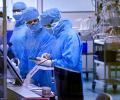
India's medical devices imports surged 41 per cent to touch Rs 63,200 crore in 2021-22, led by a 48 per cent year-on-year (YoY) jump in imports from China to Rs 13,538 crore, the commerce ministry data analysed by the Association of Indian Medical Device Industry (AiMeD) has showed. Local industry players say this has led to several small and medium units to shut shop. Rakesh Vaid of Usha Fabs, a garments exporter, had started making N95 masks in his Gurgaon factory during the peak of the Covid-19 pandemic.

The X4 offers an imposing presence that you cannot miss even in a crowd of other cars, says Pavan Lall.

The central government has for the first time allowed a private company, Bajaj Healthcare, to process opium to extract alkaloids used to make pain-killers, cough syrups, and even cancer drugs. Two government factories in Ghazipur, Uttar Pradesh, and Neemuch, Madhya Pradesh, do the work yet, processing some 800 tonnes of opium gum annually to extract alkaloids. The government on Tuesday gave Thane-based Bajaj Healthcare an initial contract to process 500 tonnes of opium gum annually and wants production to be at 800 tonnes per annum (tpa) in the next five years, indicating the state's exit from the highly-regulated sector.

The Meridian feels comfortable and upright with the quality of gadgetry, interiors and plastics expected from an international brand car. However, it lacks the overall premium-ness that may come with a top-end Japanese car or even a mid-range German car, says Pavan Lall.
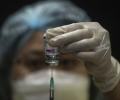
Pune-based Serum Institute of India (SII) is sitting on 200 million doses of Covishield that were manufactured in December and are set to expire in September. The company is likely to destroy these vaccines if nothing works out, Sohini Das reports.

The Virtus is indeed designed to look, act and behave like a well-built European sedan that swims in the segment between the compact sedan VW Vento and the larger Passat, says Pavan Lall.

'There will be ups and downs, and we have to plan how we live with it now.'

The Drugs Controller General of India has approved the manufacture of this Sars-CoV-2 spike protein recombinant nano-particle vaccine for 'examination, test, and analysis', reports Sohini Das.
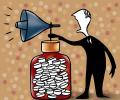
Medicine sales grew at a fast clip in smaller cities like Madurai, Meerut, Agra, and Varanasi in the last 12 months. The domestic pharmaceutical market, overall, has grown 12.3 per cent in this period, according to data from IQVIA MAT for April. MAT refers to the moving annual turnover or the turnover of the last 12 months. The data further showed that the top 30 cities contributed around 32 per cent to sales.
With all major US export-oriented drug manufacturing plants in the country up for inspection in 2022, some estimates peg that at least 20-30 per cent of the new product launches lined up for the US will be subject to on-site inspection by the US Food and Drug Administration (USFDA). The last two years saw limited physical inspections due to travel restrictions during the pandemic. "Pre-Covid, the frequency and number of inspections of manufacturing plants in India by USFDA had increased significantly," analysts from ICICI Securities Research noted. "With growing ANDA filings, especially for complex products. "We expect this trend to return with the environment normalising," analysts from ICICI Securities Research noted.

An analysis of WHO data shows that most of the countries with an older cohort of population and higher in the development index had a lower excess mortality rate than India.

'A patient visits for any other treatment, but a routine Covid test finds him to be positive.' 'Not only are they, but their whole family is also coming out to be positive.'
Indian drug firms get a shot in the arm in the $12 bn Australian drug market as the Therapeutic Goods Administration (TGA), Australia agrees to accelerate the drug approval process in that country for Indian players who already have an approved plant and product from one of the stringent regulatory authorities like US, EU or Canada. From current sales of $340 mn, the Indian firms can see a significant upside in sales; felt Dinesh Dua, former chairman of the Pharmaceutical Exports Promotion Council of India (Pharmexcil), and the MD of Nectar Lifesciences. He highlighted that only 12 percent of the Australian drug market is generic, as against 80-90 per cent in the US or EU. Of this $1.5 bn generic drug market in India, Indian companies have a small share.

'It has taken us 15 years to get to where we are. It obviously doesn't happen overnight.'

While the Slavia comes in eight different variants, it's the base model that starts at around Rs 10.7 lakh that is most likely to take a bite out of the market share of its competitors, says Pavan Lall.
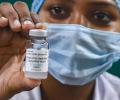
Sources close to the development said the company had no further supply commitments to the WHO, and therefore, there was no suspension of any upcoming orders, reports Sohini Das.

Sources indicated that there were no fresh orders from the Government of India, and their supply commitments have ended as of March 31, reports Sohini Das.

No expecting mother ever needs to travel for more than 30 minutes to reach one of their hospitals, believes the Cloudnine group.

With intermittent disruptions in the supply chain of raw materials from China, the Indian pharma industry has braced itself with bigger inventory. Even smaller drug makers are now carrying a month of buffer stock of key raw materials, said industry insiders. The lockdown in various Chinese provinces, including Shanghai, is likely to delay shipments by two weeks to a month, said domestic players. Shipments are critical for the Indian drug industry, which imports 70 per cent of its raw material from China.

Seven years after it announced Nexa, there's no mistaking the seriousness with which Maruti wants the segment to grow, says Pavan Lall.
 © 2026 Rediff.com - Investor Information - Advertise with us - Disclaimer - Privacy Policy - Sitemap - Feedback - About us - Terms of use - Grievances